
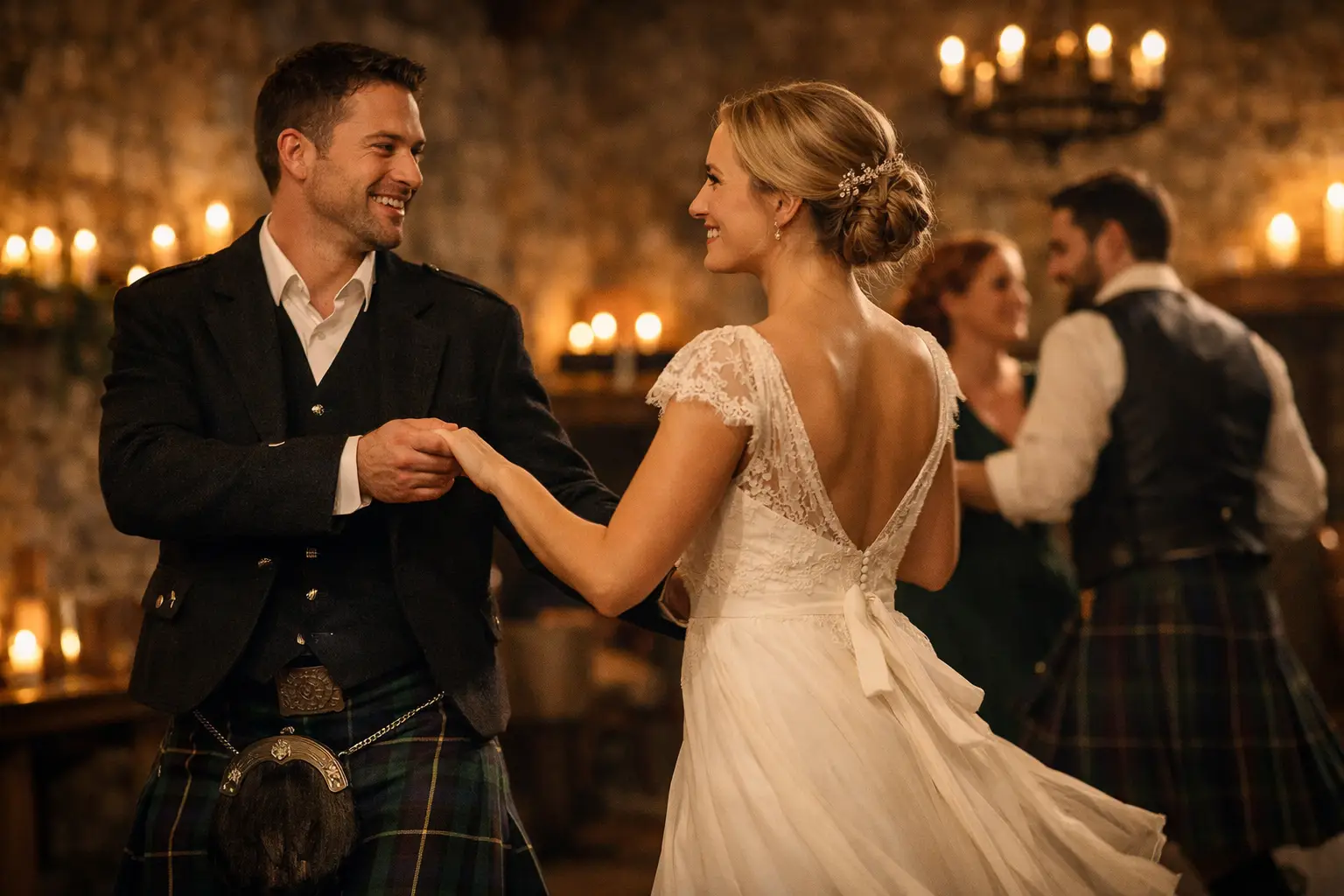
A ceilidh can be the moment your wedding properly comes alive — not because everyone suddenly turns into an expert dancer, but because it gives guests permission to join in. If you’re working out how to include a ceilidh wedding without it feeling dropped in for the sake of it, the key is to think less about ticking a Scottish box and more about where it fits naturally into the atmosphere you want.
How to include a ceilidh at your wedding without forcing it
The best ceilidhs don’t feel like a separate event bolted onto the evening. They feel like part of the day’s rhythm. In my experience, that comes down to timing more than anything else. A full evening of ceilidh works brilliantly for some couples — particularly if most guests are keen Scottish country dancers and know what’s coming. But for many modern weddings, a shorter ceilidh set lands better: enough to get everyone involved, create that big shared moment, and then open the floor into a wider party.
That’s one reason the dinner-to-dancing approach works so well for couples who want variety without the day feeling disjointed. You move from the meal into a relaxed transition, build energy properly, and bring in ceilidh calling at the point where guests are ready to take part — not while they’re still finishing coffee or drifting outside. A ceilidh is much more enjoyable when it arrives at the right moment instead of competing with everything else happening around it.
It’s also worth being honest about your guest list. If you’ve got lots of Scottish family and friends who already love a ceilidh, you can lean into it confidently. If you’ve got a more mixed crowd — guests from further afield who may never have seen one before — that’s not a reason to avoid it. It just means the format matters. A good caller makes all the difference, because the goal isn’t complexity — it’s getting the room smiling, moving and involved quickly. I’ve called ceilidhs for rooms with almost no Scottish guests at all, and it’s worked brilliantly every time, as long as the instruction is clear and the atmosphere is right.
Getting the balance right between ceilidh and party
One of the things couples worry about most is this: if we have a ceilidh, does the whole night have to become one? The answer is no — and honestly, it often works better when it doesn’t. A wedding isn’t a dance showcase. It’s a celebration with different ages, personalities and energy levels in the room.
A balanced evening might start with background music and a bit of breathing space after dinner, then move into a ceilidh set with a caller, followed by a switch into your main party music. That gives you the excitement and Scottish character of the ceilidh without losing the freedom of a packed dance floor later on. Guests who love the traditional side get their moment. Guests who are waiting for singalongs, floor-fillers or anything from the last four decades know their time is coming.
This is where planning matters more than couples often realise. Your entertainment should support the flow of the whole day — not just fill time. Lighting, sound and room atmosphere all play a part in helping a ceilidh land properly, and so does communication between your suppliers. If you’re adding garden games for the drinks reception, music video bingo to bring people together earlier on, or a live saxophone set to lift the mood before the dancing starts, each piece should have a purpose and a place in the running order. That’s often what couples are really looking for — not just someone to play music, but someone who understands how to shape the pace of the celebration.
The practical questions to settle early
First, how long do you want the ceilidh section to be? For most weddings, anywhere between 20 and 90 minutes is plenty, depending on your crowd and your priorities. Too short and it can feel like an afterthought. Too long and you risk losing guests who would happily join in for a few dances but not all night.
Second, think about space. Ceilidh dancing needs room, and some venues handle that far better than others. A packed dance floor can be brilliant later in the evening, but for reels and group dances guests need to move comfortably. If your venue has pillars, fixed furniture or a narrow layout, that doesn’t rule out a ceilidh — it just means thinking carefully about which dances will work best.
Third, tell guests what’s coming. Not with a lengthy explanation — just enough so they know they’re allowed to join in and don’t need any experience. A lot of the hesitation around ceilidhs disappears the moment people realise they’re meant to laugh their way through it.
Make it personal, not just traditional
If you’re wondering how to include a ceilidh wedding element while still making the day feel like you, the answer is straightforward: don’t build the evening around what weddings are supposed to look like. Build it around your people. A ceilidh can sit comfortably alongside chart favourites, indie anthems, soul, Motown or whatever else feels right. I’ve played Gay Gordons and Strip the Willow before sets that included everything from Beyoncé to Bruce Springsteen — and it works, because the ceilidh is one chapter of the evening, not the whole story.
That’s why music planning matters so much. When you can share the songs you love, the artists that mean something, and the kind of atmosphere you want at different points in the day, the ceilidh becomes part of a much more personal picture — not tradition for tradition’s sake, but one part of a celebration that still sounds and feels like your relationship.
Give yourself permission to keep things flexible too. Some couples want the ceilidh as the main event. Others want just a handful of dances before the evening moves on. Some want a formal first dance first; others would rather open with something more relaxed and social before bringing in the caller. There isn’t one correct format. The right choice depends on your guests, your venue, and the feel you’re going for.
If your guests won’t naturally rush to the dance floor, you can use other entertainment moments to warm the room up earlier in the day. Garden games help break the ice during the drinks reception. Music video bingo is brilliant for mixed generations because it gives everyone something familiar and fun to latch onto before the dancing starts. When guests already feel involved, they’re much more likely to throw themselves into a ceilidh later on.
The nicest weddings aren’t necessarily the ones with the longest running order. They’re the ones where each part of the day has been thought through properly, so guests feel looked after and the atmosphere keeps building. A ceilidh can absolutely be part of that — and often one of the most memorable parts — as long as it’s included with a bit of care rather than dropped in because it seemed like the done thing.
If you’re still weighing it up, think about the version of the evening you want to remember. If that picture includes everyone from grandparents to old friends on the dance floor together, laughing through the calls and giving it everything, then a ceilidh is probably worth making room for. The trick is not just having one, but placing it where it helps the whole celebration feel warmer, fuller and more alive. And if you want to see what that actually looks like in practice, take a look at how to combine a ceilidh and DJ at your Scottish wedding for more detail on how to structure the evening.
Leave a Reply
You must be logged in to post a comment.