
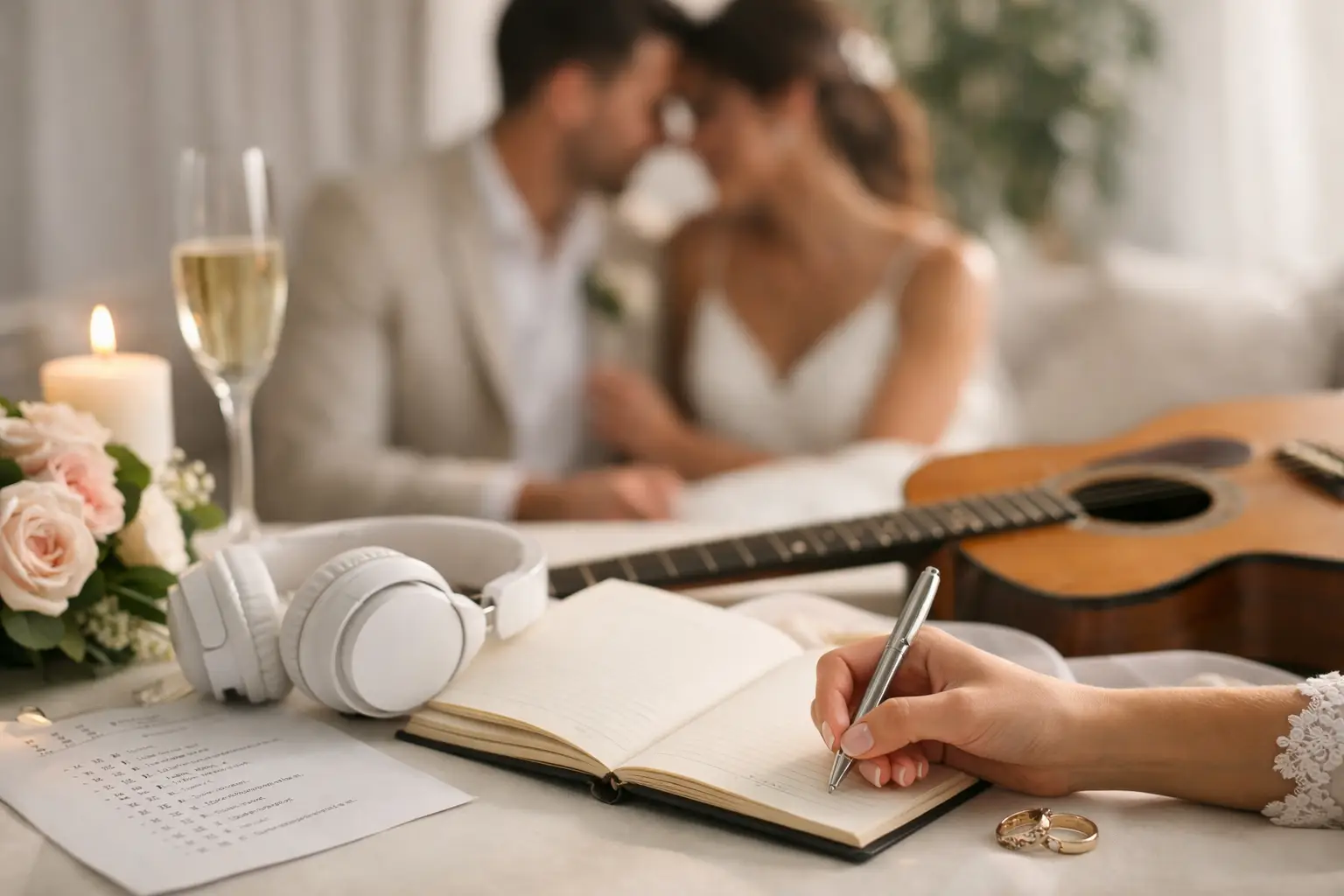
One of the quickest ways to tell whether a wedding feels beautifully considered or slightly disjointed is the music. A room can look stunning, the flowers can be perfect, and the food can be exceptional, but if the soundtrack feels random, the atmosphere rarely lands in quite the way couples hope. If you are wondering how to plan wedding music, the real goal is not simply choosing songs you like. It is shaping the emotional flow of the day so each moment feels natural, personal and memorable.
That starts earlier than most couples expect. Music planning is not something to leave until the week before, when every decision feels urgent and the playlist becomes a rushed list of favourites. The best wedding music plans are thoughtful, well-timed and built around the structure of the celebration.
How to plan wedding music from the mood backwards
A useful place to begin is not with specific tracks, but with the feeling you want your guests to experience. Think about the day in scenes rather than one long event. The music for guests taking their seats should feel different from the music for your drinks reception. Dinner needs a different energy again, and the transition into dancing matters just as much as the party itself.
When couples begin with mood, their choices usually become clearer. Elegant and understated is different from lively and showstopping. Romantic can lean timeless or contemporary. A polished black-tie celebration may call for a very different soundtrack from a relaxed country house wedding, even if both couples enjoy similar artists.
This is where personal taste and guest experience need to meet in the middle. Your wedding should absolutely sound like you, but it also needs to work in the room. A song you both love in the car may not create the right atmosphere for dinner. Equally, a packed dance floor is rarely built on trying to impress everyone with obscure choices. The strongest music plans balance identity with instinct.
Break the day into key musical moments
Trying to plan your wedding music as one giant playlist usually leads to gaps, repetition or the wrong energy at the wrong time. It is far easier to divide the day into distinct sections and make decisions for each one.
Ceremony music
The ceremony carries some of the most emotionally charged musical moments of the entire day. That usually includes music for guest arrival, the entrance, signing of the register if applicable, and the exit. Each piece has a job to do.
Guest arrival music should settle the room and create anticipation without overpowering conversation. Your entrance music needs to feel right for the pace of the walk and the emotion of the moment. The signing music often works best when it is warm and unobtrusive, while the exit can lift the room and signal celebration.
This is one area where restraint can be very effective. Not every ceremony moment needs a dramatic statement. Sometimes one meaningful choice, beautifully timed, has far more impact than several competing ideas.
Drinks reception and photographs
This part of the day often gets less attention than it deserves. Guests are mingling, the formalities have eased and the atmosphere starts to open up. Music here should feel stylish, welcoming and easy to enjoy in the background. It supports conversation rather than demanding attention.
Acoustic covers, soul, jazz-inspired tracks and relaxed contemporary songs often work well, but the right choice depends on the setting and your overall style. If your venue is elegant and formal, the soundtrack should complement that. If the day has a more relaxed, modern feel, the music can reflect it.
Wedding breakfast
Dinner music is about tone and pacing. It should add warmth to the room without making speeches or conversation feel crowded. A common mistake is choosing songs that are too energetic too early. If dinner feels like pre-club background music, it can make the whole celebration feel slightly out of step.
This does not mean the music should be dull. It should feel curated, polished and gently uplifting. Think of it as part of the table styling – not the centrepiece, but something that shapes the whole experience.
Evening reception and dancing
This is where many couples focus their energy, and understandably so. The evening party is one of the most memorable parts of the day. But a great dance floor is rarely created by a list of big songs alone. It depends on timing, reading the room and knowing when to shift gear.
There is usually a moment where the day turns from refined celebration to full party. The success of that transition matters. If it happens too abruptly, it can jar. If it happens too slowly, the energy can drop. Your first dance, the songs that follow it, and the way guests are invited onto the floor all help set the tone.
How to plan wedding music that feels personal
Personalisation does not mean every song must have deep significance. It means the overall soundtrack should reflect your relationship, your style and the kind of atmosphere you want to create.
Start with a shortlist of songs that genuinely matter to you both. That may include the track from your first date, songs tied to holidays, concerts or milestones, or simply artists you always return to together. Then look beyond those obvious choices. Ask yourselves what genres feel most like you as a couple. Is your taste classic and timeless, modern and fashion-led, or varied enough to need careful blending?
It also helps to decide where personal songs belong. Some are perfect for intimate moments such as the ceremony or first dance. Others are better woven into dinner or later in the evening. Not every meaningful track is a dance floor song, and that is perfectly fine.
There is also a practical point here. If you both love very different music, the answer is not to force one style over the other. It is to build a musical journey that gives each of you a place in the day. The result often feels richer and more authentic.
Think about your guests without losing yourselves
A wedding is personal, but it is also shared. The most successful music planning acknowledges both. You do not need to turn your wedding into a crowd-pleasing jukebox, but you should think about who is in the room.
A mixed-age guest list usually benefits from variety. That might mean classic singalong tracks later in the evening, balanced with newer music and your own favourites. If most of your guests love to dance, you can be bolder with tempo and transitions. If your crowd is more reserved, the music may need a more gradual build.
This is where experience makes a difference. Reading a room is not the same as pressing play on a playlist. A well-planned wedding soundtrack should leave space for responsiveness, because what works on paper can feel different in real time.
Do not overlook the practical details
Music planning is emotional, but it is also logistical. The soundtrack needs to align with timings, announcements, key transitions and supplier coordination. If the ceremony is in one space and the reception in another, the setup needs to support both. If speeches are running later than expected, the music needs to adjust around that.
This is one reason many couples choose a wedding specialist rather than treating entertainment as a final booking. A dedicated planning process helps avoid awkward silences, mistimed entrances and sudden shifts in atmosphere. At Premier Disco Weddings, for example, couples can share preferences through an online planning platform, which makes the process feel far more considered than sending over a last-minute list of songs.
Even if you are still deciding on the exact format of your entertainment, make sure you have thought through the essentials. Your must-play songs, your do-not-play list, the timing of your first dance, and any cultural or family traditions should all be discussed well in advance.
A few decisions that make everything easier
The easiest wedding music plans usually come from clarity, not quantity. You do not need hundreds of instructions. You need the right ones.
Choose a handful of absolute must-plays, not fifty. Be honest about songs or genres you would rather avoid. Decide whether you want the evening to feel elegant throughout or to become more high-energy as the night goes on. If you are open to requests, set boundaries. If you are not, that is equally fine.
It also helps to trust professional judgement on sequencing. A song can be brilliant and still be wrong for that exact moment. Placement matters just as much as selection.
Give the music room to tell your story
The best wedding music does not shout for attention at every turn. It supports, lifts, softens and celebrates. It turns arrivals into anticipation, dinner into atmosphere and dancing into release. When it is planned well, guests may not always be able to explain why the day felt so good – they simply feel it.
So if you are working out how to plan wedding music, think beyond a playlist. Think about mood, timing and meaning. Think about the moments you want to remember and how you want them to feel when they happen. When the soundtrack is shaped with care, your wedding does not just sound beautiful. It feels beautifully yours.
See also: planning your wedding playlist order, timing your wedding songs, cocktail hour and dinner music, how to personalise your wedding music, and personalised wedding playlists.
Want your wedding music planned by a professional? Get in touch with Premier Disco Weddings.
Frequently Asked Questions
How do I plan wedding music if I do not know where to start?
Start with the three most important musical moments: your entrance, your first dance and your last dance. Once those three anchors are decided, everything else becomes easier to plan around them. The ceremony music, cocktail hour background and evening set all flow from understanding the tone those three moments set.
How do I balance what I want with what my guests will enjoy?
Think of it as a Venn diagram. Your personal choices sit in your circle. Broadly accessible crowd-pleasers sit in your guests’ circle. The overlap — songs you both love and that your guests will respond to — should form the backbone of the evening. Personal tracks work best as special moments within a broader, more inclusive set.
What if I keep changing my mind about songs?
This is completely normal. Most couples go through several versions of their song choices before the final list. Set a deadline — usually four to six weeks before the wedding — and commit to your choices at that point. Making changes after that deadline adds unnecessary stress and limits your DJ’s preparation time.
How do I know if my wedding music plan is actually good?
Share it with your DJ and ask for honest feedback. An experienced wedding DJ has seen what works and what does not across hundreds of receptions. They can tell you whether your energy arc makes sense, whether there are any sequences that might clear the floor and whether the overall plan matches the vision you have described.
Leave a Reply
You must be logged in to post a comment.