
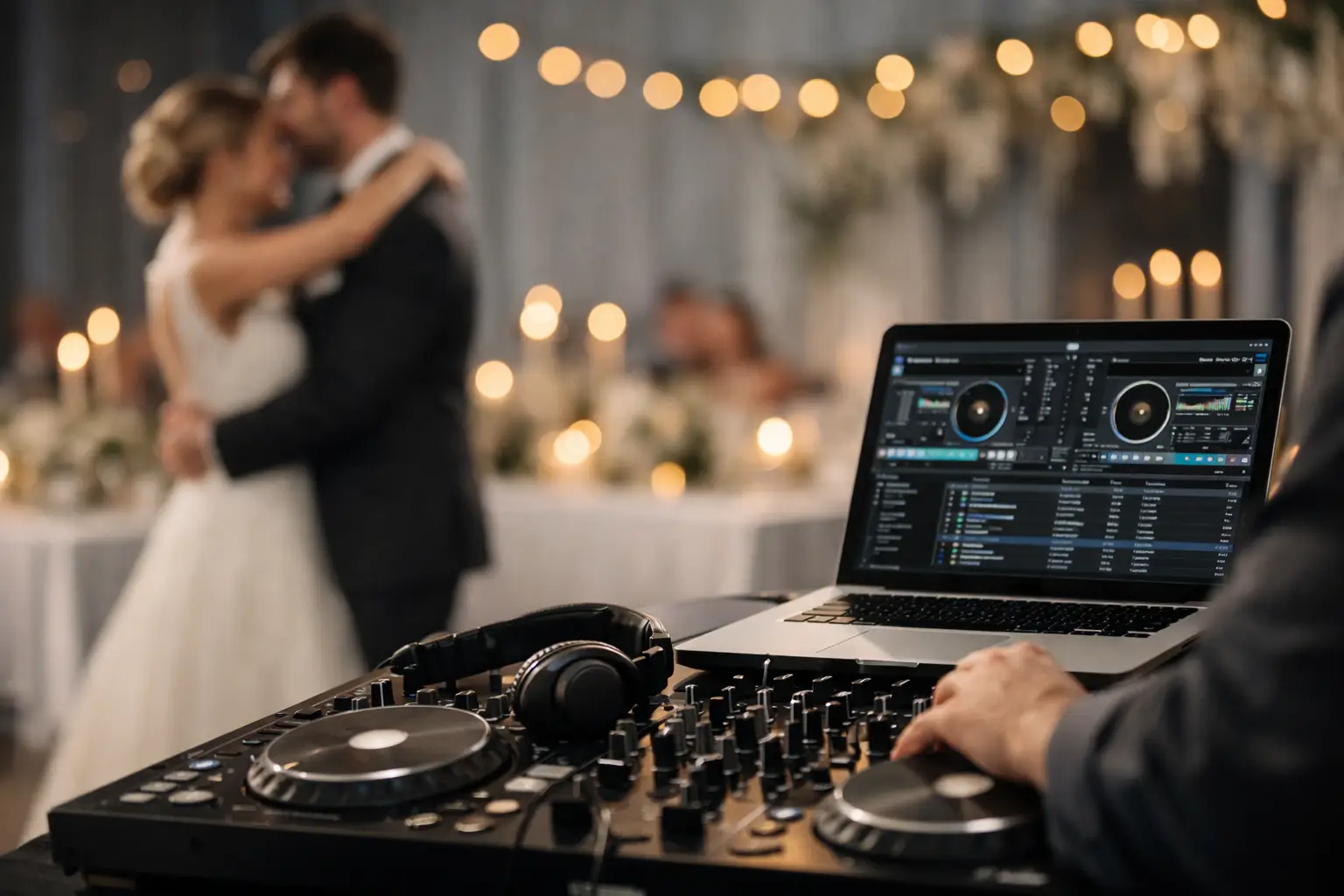
The songs you choose for your wedding do far more than fill silence. Personalised wedding playlists set the tone before a word is spoken, carry guests through each transition, and often become one of the clearest memories of the day. When the music feels right, everything feels more considered. The atmosphere softens during dinner, lifts naturally as the evening begins, and lands exactly where it should when the dance floor is full.
That is why a wedding playlist should never be treated as a long list of favourite songs. A great wedding soundtrack is curated with timing, emotion and guest experience in mind. It should sound like you, but it also needs to work in the room.
Why personalised wedding playlists matter
Most couples begin with the obvious question: what songs do we love? That matters, of course, but it is only one part of the picture. Weddings have a rhythm of their own. Guests arrive, settle, mingle, eat, chat, toast, move, celebrate and then fully let go. Music has to support each of those moments without feeling forced.
A personalised approach creates something much more refined than a generic party set. It allows your day to reflect your relationship, your taste and the kind of celebration you want to host. That might mean understated elegance during your drinks reception, a warm and romantic dinner atmosphere, and a confident shift into a fuller, more energetic evening.
There is also a practical side to it. A carefully planned playlist helps avoid tonal jolts. You do not want your ceremony music to feel detached from the rest of the day, or your evening reception to begin with the wrong level of energy. Cohesion matters. The best weddings feel effortless, even though a great deal has been considered behind the scenes.
What makes personalised wedding playlists feel polished
The difference between a playlist that is personal and one that is genuinely effective usually comes down to structure. The strongest playlists are built around key moments, not just song titles.
Start with the emotional anchors
Every wedding has a handful of moments where music carries particular weight. The ceremony entrance, signing, confetti walk, drinks reception, first dance and final song all deserve special attention. These are the points your guests will remember most clearly, and they are often the moments that feel most emotional for you as a couple.
Choosing these songs first gives your playlist shape. It also helps define the style of the wider soundtrack. If your ceremony music is modern and understated, but your dinner playlist suddenly feels like a busy nightclub warm-up, the overall flow can feel disjointed.
Think in phases, not one long playlist
A wedding day is not one event. It is a series of smaller experiences that need different musical treatment. Background music for guest arrival should feel welcoming without demanding attention. Drinks reception music can be a little brighter and more social. Dinner music needs warmth and polish. The evening reception requires a proper build in tempo and energy.
When couples group songs by phase, it becomes much easier to judge what works. A track you love might be perfect for late evening dancing but entirely wrong for the meal. That does not mean it has no place. It simply needs the right setting.
Leave room for your guests
A personalised playlist should absolutely reflect your taste, but weddings are shared occasions. Your guests should feel included in the celebration, not like they have stepped into someone else’s private listening session.
That is where balance matters. You may love deep album cuts, niche genres or songs tied to personal memories, and some of those can be wonderful choices. But if too much of the evening is filled with tracks that only mean something to the two of you, the dance floor can become hesitant. The best results usually come from blending personal favourites with recognisable songs that invite different generations onto the floor.
How to build personalised wedding playlists without losing flow
A common mistake is trying to control every song in minute detail. It is understandable. Couples want the day to feel personal and considered. But there is a point where over-planning can work against you.
Music on the day needs to respond to the room. If guests are lingering over dinner, if speeches run later than expected, or if the dance floor takes off faster than anticipated, the soundtrack needs to adapt. That is why many couples benefit from creating a strong framework rather than prescribing every track in strict order.
Be clear about your must-plays and no-plays
This is one of the most helpful parts of the planning process. A shortlist of must-play songs gives your DJ a clear understanding of what matters most to you. A no-play list is just as useful. If there are artists, genres or overused wedding songs you would rather avoid, saying so early prevents disappointment later.
The key is to be selective. Ten to twenty meaningful must-plays often provides more clarity than a list of one hundred songs. It gives enough direction to shape the set while still allowing room for professional judgement.
Consider the age mix in the room
A wedding guest list usually spans generations, friendship groups and family circles. That mix is part of the beauty of the occasion, but it does mean your playlist needs range. Music that appeals to your university friends may not bring your parents or older relatives into the celebration. Equally, leaning too heavily on crowd-pleasers can dilute the personal feel you wanted.
This is where thoughtful curation matters most. The right soundtrack moves between styles and eras in a way that feels natural rather than calculated. Guests do not need to love every song. They only need to feel that the night has momentum and that there is something for them within it.
Match the music to the setting
Venue, room layout, lighting and schedule all affect how music is received. A stately country house dinner calls for a different atmosphere than a modern city wedding. A compact dance floor full of energy can handle a bigger shift in intensity than a large room where guests are spread out.
This is one reason premium wedding entertainment goes beyond playback. Music works alongside sound quality, lighting and timing. Even an excellent song can fall flat if it arrives at the wrong volume, in the wrong moment, or without the right transition around it.
Personalised wedding playlists for each part of the day
Ceremony and drinks reception
For the ceremony, restraint usually works best. That does not mean bland or overly traditional. It means choosing music that adds emotion without distracting from the moment itself. Instrumental versions, acoustic tracks and softer contemporary songs often work beautifully, especially if they already mean something to you.
During drinks reception, the mood can open up. This is a lovely place for stylish background music that supports conversation while still shaping the atmosphere. Soul, acoustic covers, light jazz and relaxed contemporary tracks all work well depending on the tone of your day.
Dinner to dancing
This is where the soundtrack needs especially careful handling. The move from meal to evening celebration should feel like a natural progression, not a sudden switch. Music during dinner should have character, but not dominate the room. As dessert clears and the evening guests arrive, energy can begin to lift.
For many couples, this section of the day is where professional guidance makes the biggest difference. Reading the pace of the room, coordinating key moments and preparing the dance floor takes more than pressing play. It requires experience and timing.
First dance and evening reception
Your first dance sets the emotional and musical direction for the evening. Some couples want a romantic classic, others prefer something unexpected. Either can work. What matters is that it feels comfortable and true to you.
From there, the evening playlist should build with purpose. The strongest sets do not peak too early. They create confidence on the dance floor, widen the mix as guests join in, and know when to hold momentum or shift direction. This is where a playlist becomes a live experience rather than a fixed list of songs.
Why working with a wedding DJ changes the result
A streaming playlist can hold songs. It cannot read the room, smooth transitions, coordinate with your venue or rescue the energy if a moment lands differently than expected. Weddings are live events, and the music needs to behave that way too.
That is why bespoke planning matters. At Premier Disco Weddings, couples can share preferences through an online planning platform, allowing the soundtrack to be tailored in detail before the day itself. The value is not simply in song choice. It is in shaping the atmosphere across the full celebration, supported by quality sound, carefully controlled lighting and close coordination with other suppliers.
Personalised wedding playlists work best when they combine your story with professional judgement. That is the balance that creates a celebration that feels both personal and beautifully put together.
If you are building your wedding soundtrack now, start with the moments you want people to feel as much as the songs you want them to hear. The right music does not just accompany the day – it gives it shape, memory and heart.
See also: our complete wedding music planning guide, how to build a playlist for weddings, planning the right playlist order, and personalising your wedding music.
Want a playlist built around you as a couple? Get in touch with Premier Disco Weddings.
Frequently Asked Questions
How do I create a personalised wedding playlist that still works for all my guests?
Start by identifying must-play tracks that genuinely matter to you as a couple, then build the rest of the playlist around your guest demographic. A 70-30 split often works well — 70% broadly accessible crowd-pleasers that everyone will recognise, and 30% personal choices that reflect you. This ensures the evening feels like yours without alienating guests.
How specific should I be when briefing my DJ about my playlist preferences?
Be specific about your must-plays and your absolute do-not-plays. For everything else, give a general mood or era direction — we want 80s and 90s pop, we love indie, we want nothing cheesy — and trust your DJ to fill the gaps. Over-specifying every track limits your DJ’s ability to read the room and respond to what is actually working.
What if my partner and I have completely different music tastes?
This is more common than couples realise, and it usually produces better evenings. Two different tastes means two different guest demographics get their moment across the evening. Work with your DJ to find the overlap — most couples share more musical ground than they initially think — and build the playlist around that core, with dedicated moments for each distinct taste.
How early before the wedding should I finalise my playlist with my DJ?
Aim to have your must-plays, do-not-plays and any special moment songs confirmed at least four weeks before the wedding. This gives your DJ time to source any tracks they do not already have, prepare edits for songs that need them, and build a cohesive set around your choices.
Leave a Reply
You must be logged in to post a comment.