
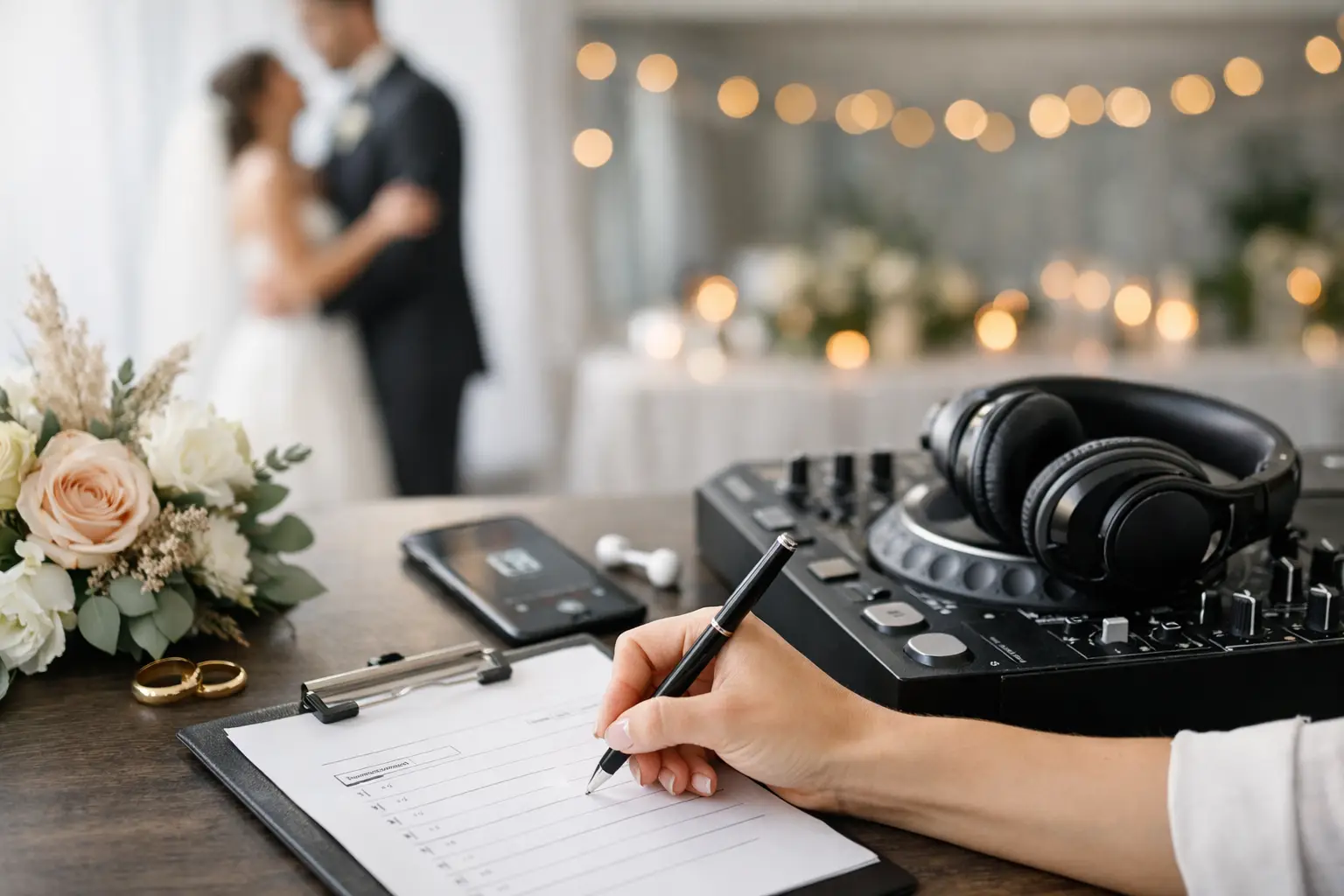
A packed dance floor rarely happens by accident. The weddings that feel effortless usually have one thing in common — the music has been planned with care, not added as an afterthought. If you are searching for a wedding playlist planning example, what you really need is a clear picture of how the soundtrack should support the flow of the day, from the first drink to the final song.
That matters because a wedding playlist is not one long list of favourites. It is a series of musical moments, each with a different job to do. The ceremony needs feeling without distraction. The drinks reception should lift the atmosphere without overpowering conversation. Dinner benefits from warmth and elegance. Then, when the evening begins, the energy needs to rise naturally so the room feels invited onto the dance floor rather than pushed.
Planning your wedding playlist by part of the day
The simplest way to plan well is to think in sections rather than one master playlist. That gives each part of the wedding its own identity while still feeling joined up.
For the ceremony, the music should feel personal and poised. Most couples need music for guest arrival, the entrance, the signing of the register and the exit. Guest arrival works well with gentle acoustic tracks, piano-led versions of meaningful songs, or romantic classics that set a calm tone. The aisle song deserves more thought. It should be emotionally resonant, but it also needs the right pace. A song that feels beautiful in headphones can feel rushed in the room if the tempo is too fast.
For the drinks reception, the aim changes. This is often where guests relax, congratulate you and begin to settle into the celebration. Here, a refined background feel usually works best — soul, Motown, acoustic covers, light indie, jazz-inspired tracks or laid-back pop. If you are using extras such as a sax player or garden games, the music should complement that atmosphere rather than compete with it.
Dinner is where many couples underestimate the value of thoughtful music. Silence can make a room feel flat, but music that is too heavy or too loud can interrupt conversation. A well-planned dinner set adds polish. It should feel warm, stylish and easy to listen to, while allowing the room to build anticipation for the evening ahead.
Then comes the evening reception, where structure matters most. Early evening often suits familiar singalongs, crossover hits and tracks with broad appeal. Later on, once the dance floor is established, you can lean more into your personal tastes. The strongest wedding parties usually balance the couple’s favourite music with records that guests of different ages will recognise and enjoy.
A realistic wedding playlist example across the full day
Below is a realistic example of how a wedding soundtrack might be shaped across the day. It is not a rigid formula, because every couple and every room is different, but it shows the thinking behind a playlist that feels elegant, personal and lively.
Ceremony
Guest arrival could begin with soft instrumental versions of meaningful love songs, followed by a few understated contemporary tracks. The entrance might be a romantic piano piece or a slower modern ballad with space for the moment to breathe. During the signing, two lighter songs often work well, especially if one has significance to your relationship. For the exit, this is the time for something brighter — joyful, uplifting and confident.
Drinks reception
Imagine a run of Stevie Wonder, Bill Withers, Norah Jones, Jack Johnson, Eva Cassidy and selected acoustic covers of modern favourites. That creates warmth and style without becoming too formal. If your wedding is outdoors or has a garden setting, this style feels particularly natural.
Wedding breakfast
Dinner music might move through elegant soul, timeless pop, mellow indie and a few jazz standards. Think Etta James, Van Morrison, The Beatles, Adele in her softer moments, or Michael Bublé in moderation. The key is variety within a consistent mood. You do not want the music to steal focus from the speeches, but you do want the room to feel thoughtfully hosted.
Evening reception
An opening set could begin with floor-fillers that welcome a mixed crowd — Whitney Houston, ABBA, Earth Wind & Fire, George Ezra, Bruno Mars, Dua Lipa. Once guests are dancing, the playlist can branch out depending on the room. Some weddings lean into nineties pop and R&B. Others favour indie anthems, disco, old-school classics or current chart hits. A strong DJ reads the energy in real time and adjusts. That is why a playlist alone is never the whole story.
What makes a good wedding playlist example actually work
The best wedding playlist planning example does more than name songs. It shows why songs belong in certain places. Your wedding is not a club night and it is not a dinner party either. It moves through several moods, and the music needs to guide those transitions smoothly.
A common mistake is putting all your biggest songs too early. If the drinks reception and dinner are packed with full-energy anthems, the evening can feel oddly flat because there is nowhere left to build. Another mistake is making the evening too niche from the start. Your university favourites may be perfect at 10 pm once the floor is full, but less effective at 7.30 pm when your aunt, your friends from work and your grandparents are all deciding whether to dance.
Good planning also leaves room for spontaneity. You want a clear musical direction, but not such a fixed playlist that the celebration cannot respond to the people in the room. Weddings are live occasions. Guest energy, timing changes and even weather can affect what works best in the moment.
How to personalise your wedding playlist without losing momentum
Personalisation is where a luxury wedding soundtrack really comes into its own. The most memorable celebrations feel like the couple, not a copy-and-paste version of someone else’s reception.
That does not mean every song has to carry deep meaning. In practice, it is often better to choose a handful of anchor tracks that matter most to you — perhaps your aisle song, first dance, a song tied to a holiday, a family favourite, or the record that always gets your friends moving. Around those key moments, the wider playlist can be built to support guest experience and flow.
If you and your partner have very different tastes, that is completely manageable. One of you may love indie guitar music while the other prefers R&B and commercial pop. Rather than trying to force everything into one style, it usually works better to decide where each taste fits best. Indie can land brilliantly later in the evening, while soul and pop may help establish broader early momentum.
You should also think carefully about your do-not-play list. This can be just as useful as your must-play list, especially if there are songs or genres you know will pull you out of the moment. The key is to be selective. A thoughtful shortlist of preferences is far more helpful than pages of conflicting instructions.
Why timing matters as much as song choice
Even the perfect song can fall flat if it lands at the wrong time. This is one reason wedding music planning benefits from experience. A first dance track needs the right setup. A singalong classic works best once people feel relaxed. A ceilidh set, if you are including one, needs to be placed where it adds energy rather than interrupts it.
The same goes for transitions. Moving from speeches into dinner, from background music into evening dancing, or from a live sax set into a DJ floor-filler all requires judgement. These details are often invisible to guests, which is exactly the point. When done well, the whole celebration feels polished and effortless.
For couples planning weddings in Scotland, there can also be lovely regional touches to consider. A ceilidh, for example, can create a joyful shared moment for guests of all ages, but it works best when introduced clearly and timed well within the evening. It should feel like part of the celebration’s rhythm, not an isolated add-on.
Building your own playlist with confidence
If you are creating your own ideas before speaking to a DJ, start by listing the key moments of the day. Then note three things for each section: the mood you want, any must-play songs, and any music you want to avoid. That simple framework is often enough to turn vague ideas into a plan.
After that, focus less on finding hundreds of songs and more on defining the overall feel. Romantic and timeless is a useful direction. So is stylish and upbeat, or relaxed and soulful. Once the character of the day is clear, the actual song choices become easier.
At Premier Disco Weddings, this is exactly why music planning sits at the heart of everything I do. The strongest wedding entertainment is never just about pressing play — it is about shaping atmosphere, managing energy and making sure the music feels as considered as every other part of the celebration.
Your playlist does not need to be perfect on paper. It needs to feel right in the room, at the right moment, with the people you love around you — and that is where careful planning makes all the difference.
Ready to start planning your wedding music? Get in touch and I will help you build a soundtrack that fits your day perfectly — from the first song to the last dance.
Leave a Reply
You must be logged in to post a comment.